Rahul Mishra Brings 'Devi' to Paris Haute Couture Week
The designer's Fall 2026 couture collection trades chisels for embroidery needles, spending thousands of stitches to recreate the stone goddesses carved into India's ancient temples.
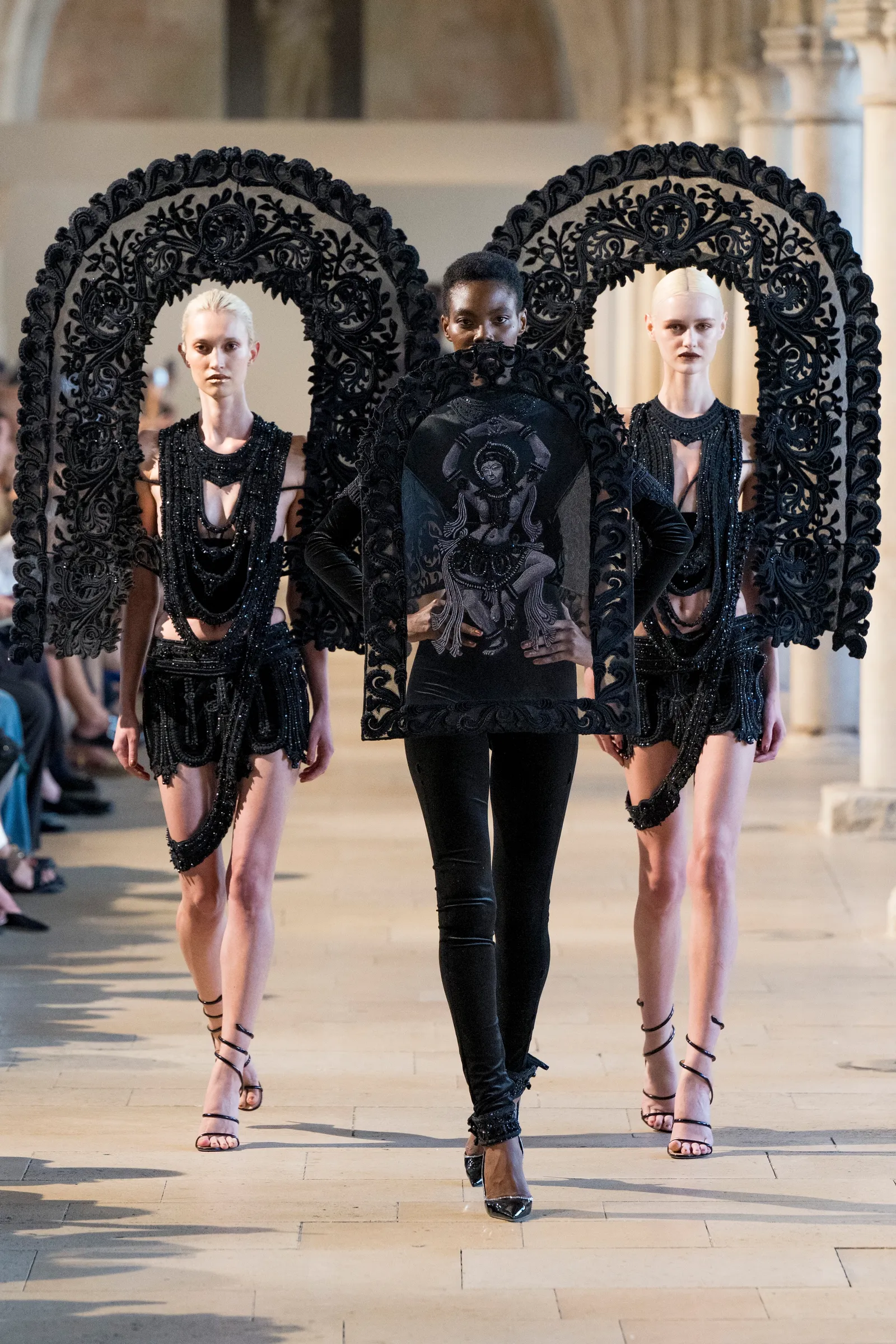
Rahul Mishra Fall 2026 Couture · Courtesy of Rahul Mishra
Rahul Mishra opened his Fall 2026 couture presentation in Paris with a collection called Devi: the eternal muse, built around the celestial figures carved into Indian temple walls, the apsaras, goddesses and musicians shaped in stone by generations of unnamed artisans. Rather than treating temple sculpture as a costume reference, Mishra used the collection to sit with what those carvings actually demanded to make: years of patient, repetitive labor spent coaxing softness out of solid rock.
It's the ground the designer has returned to before. Nineteenth-century observers like architectural historian James Fergusson wrote with genuine astonishment about how Indian temple carving had preserved entire vanished civilizations, encoding ritual, craft and shifting ideas of beauty directly into stone. Devi picks up that same thread, using couture to ask what kept a sculptor returning to the same divine figure, sometimes for years, until the raw material seemed to take on something like feeling.
An Additive Approach to Sculpture
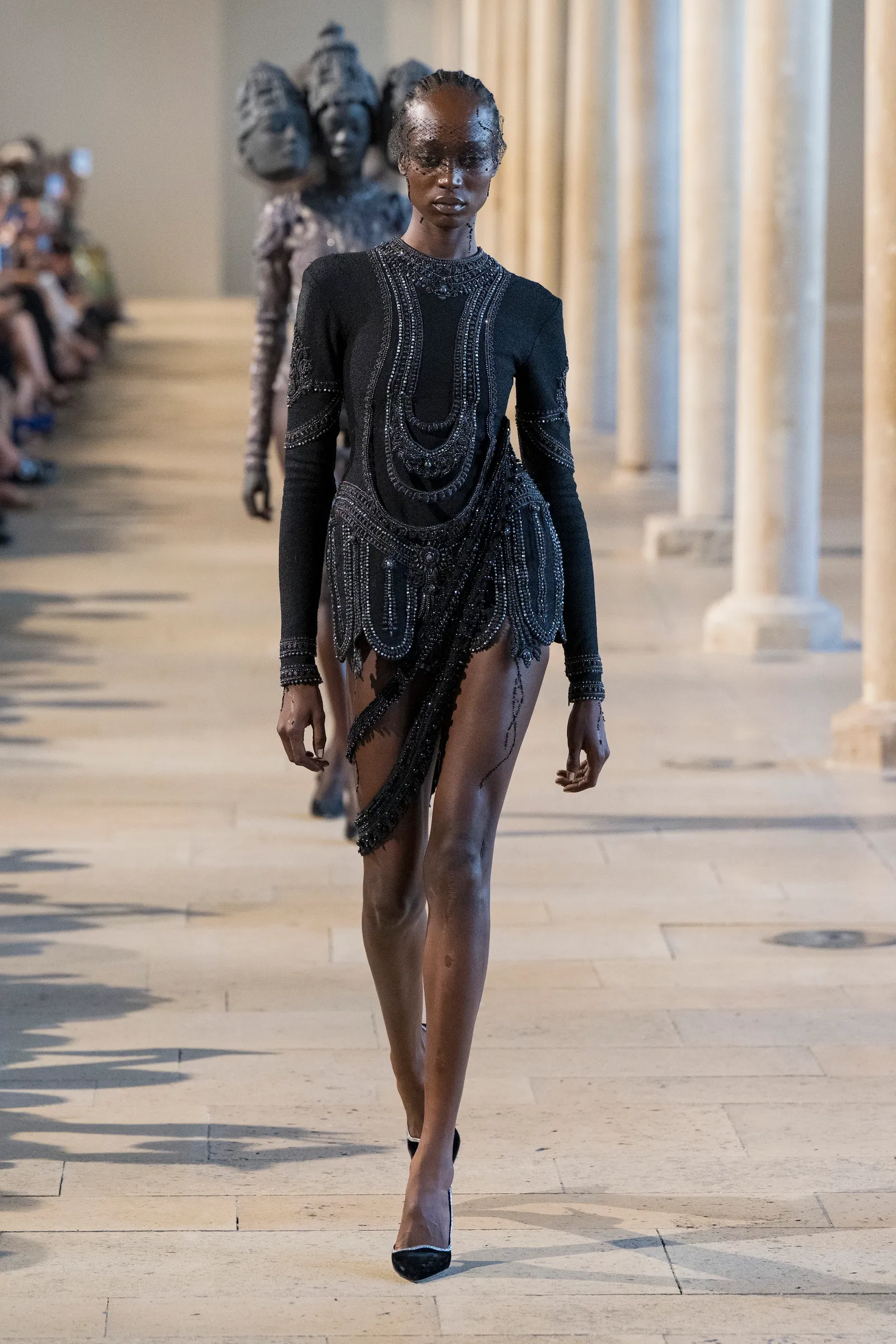
Rahul Mishra Fall 2026 Couture · Courtesy of Rahul Mishra
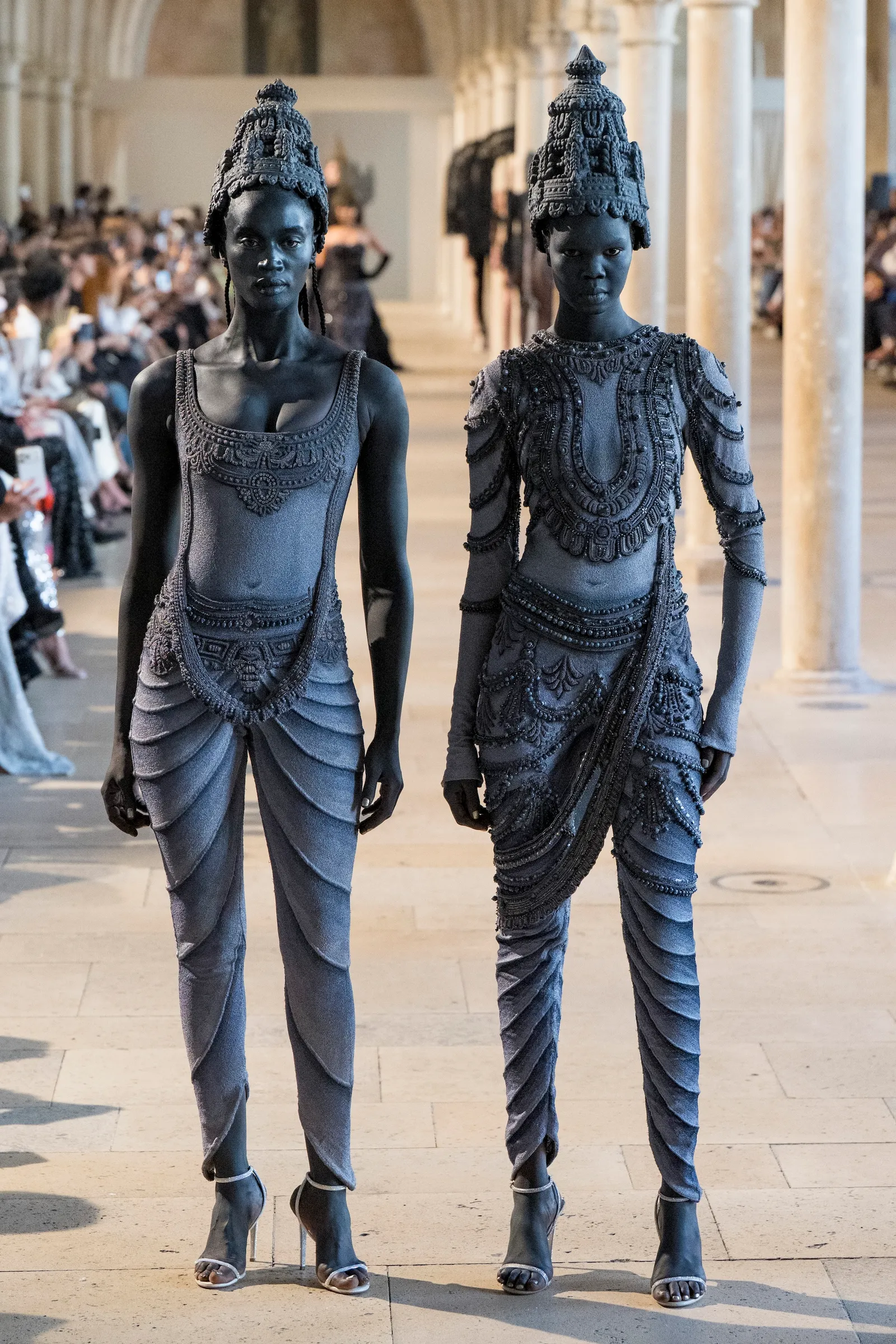
Rahul Mishra Fall 2026 Couture · Courtesy of Rahul Mishra
The collection also quietly answers a much older idea in art history. Michelangelo described sculpture as freeing a form already trapped inside a block of marble, carving away everything that wasn't the figure. Mishra works in the opposite direction. Instead of subtraction, Devi builds up: thousands of individual stitches accumulate, garment by garment, until the embroidery itself starts to read as carved relief rather than needlework.
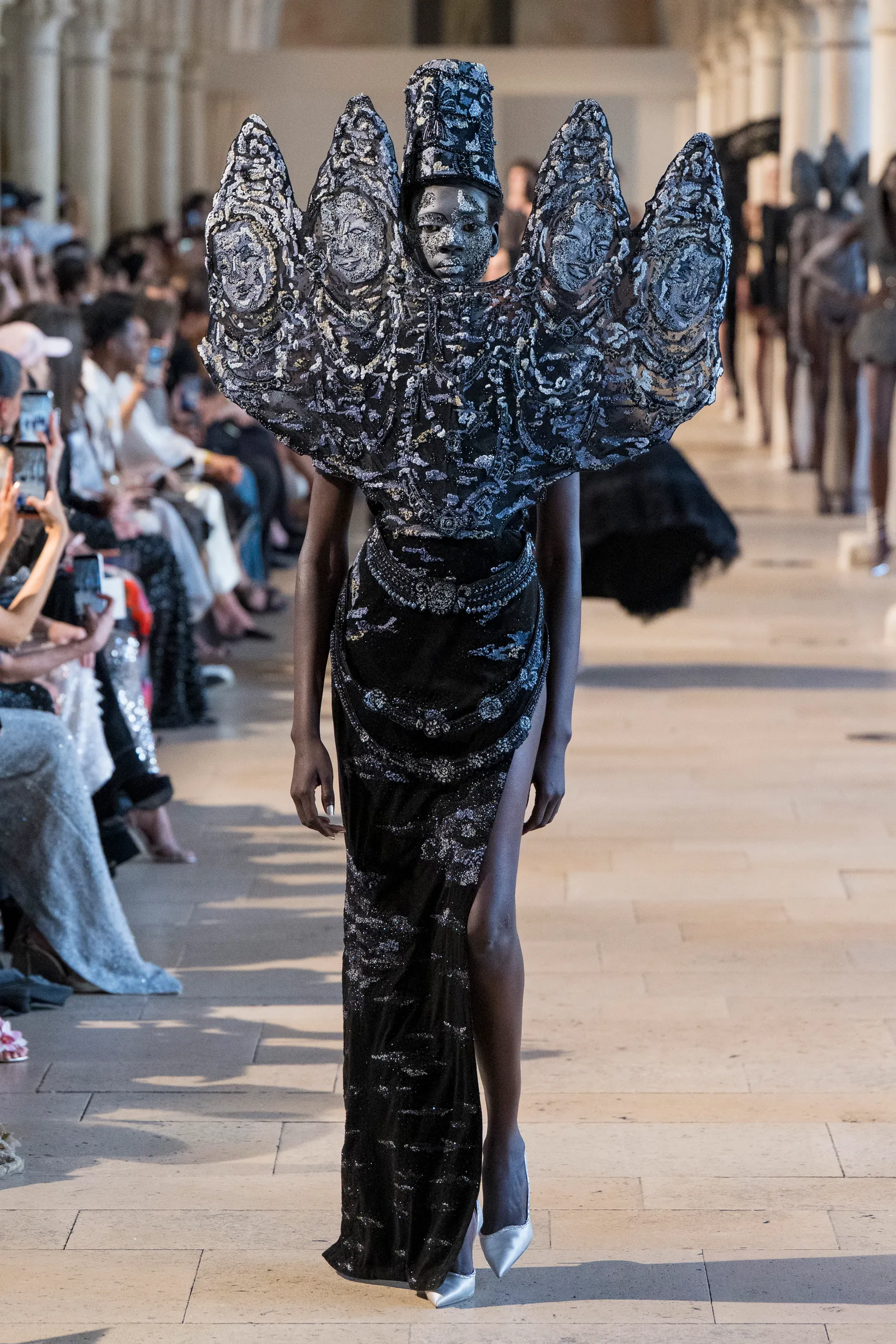
Rahul Mishra Fall 2026 Couture · Courtesy of Rahul Mishra
Turning Fabric Into Stone
Rahul Mishra Fall 2026 Couture · Courtesy of Rahul Mishra
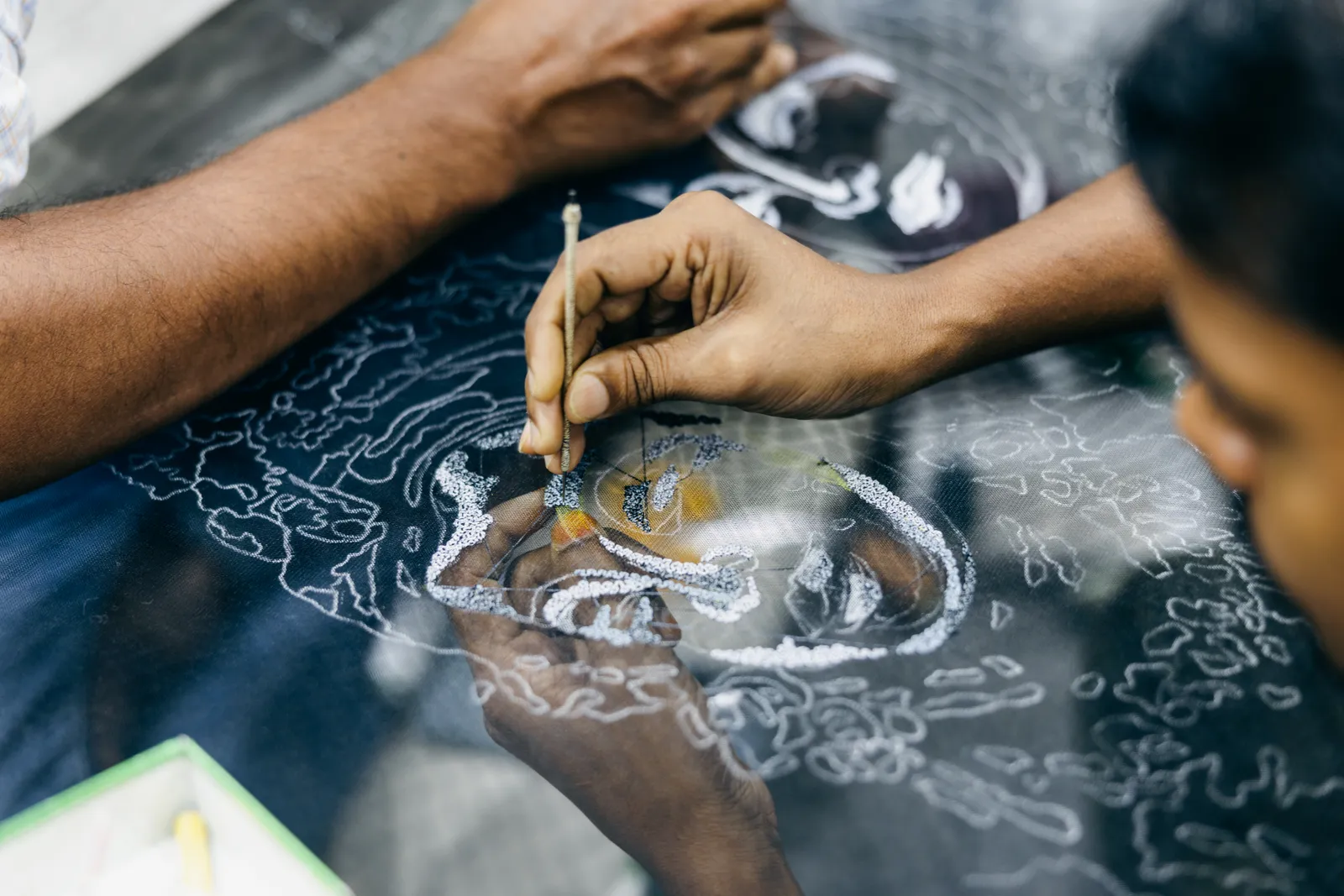
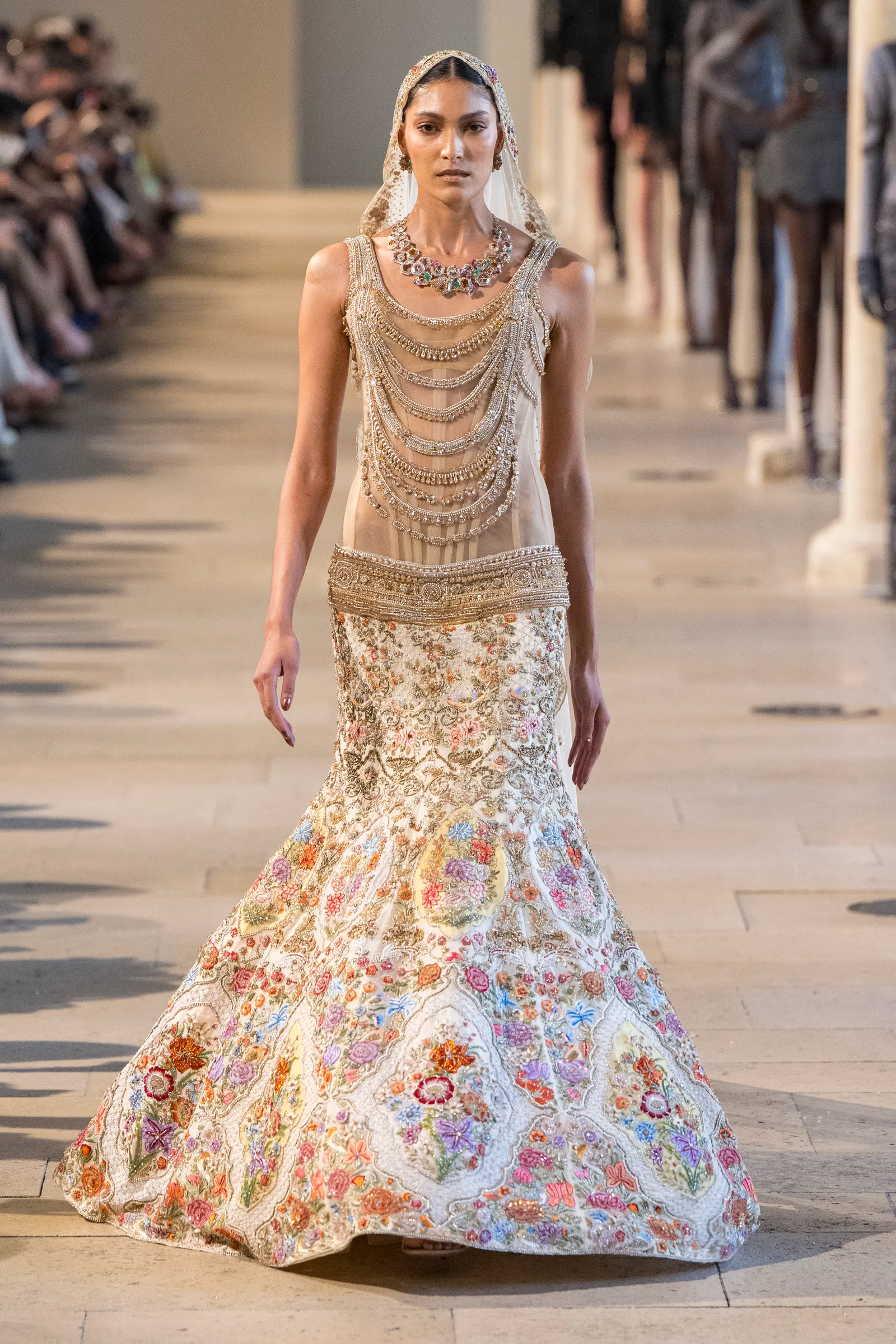
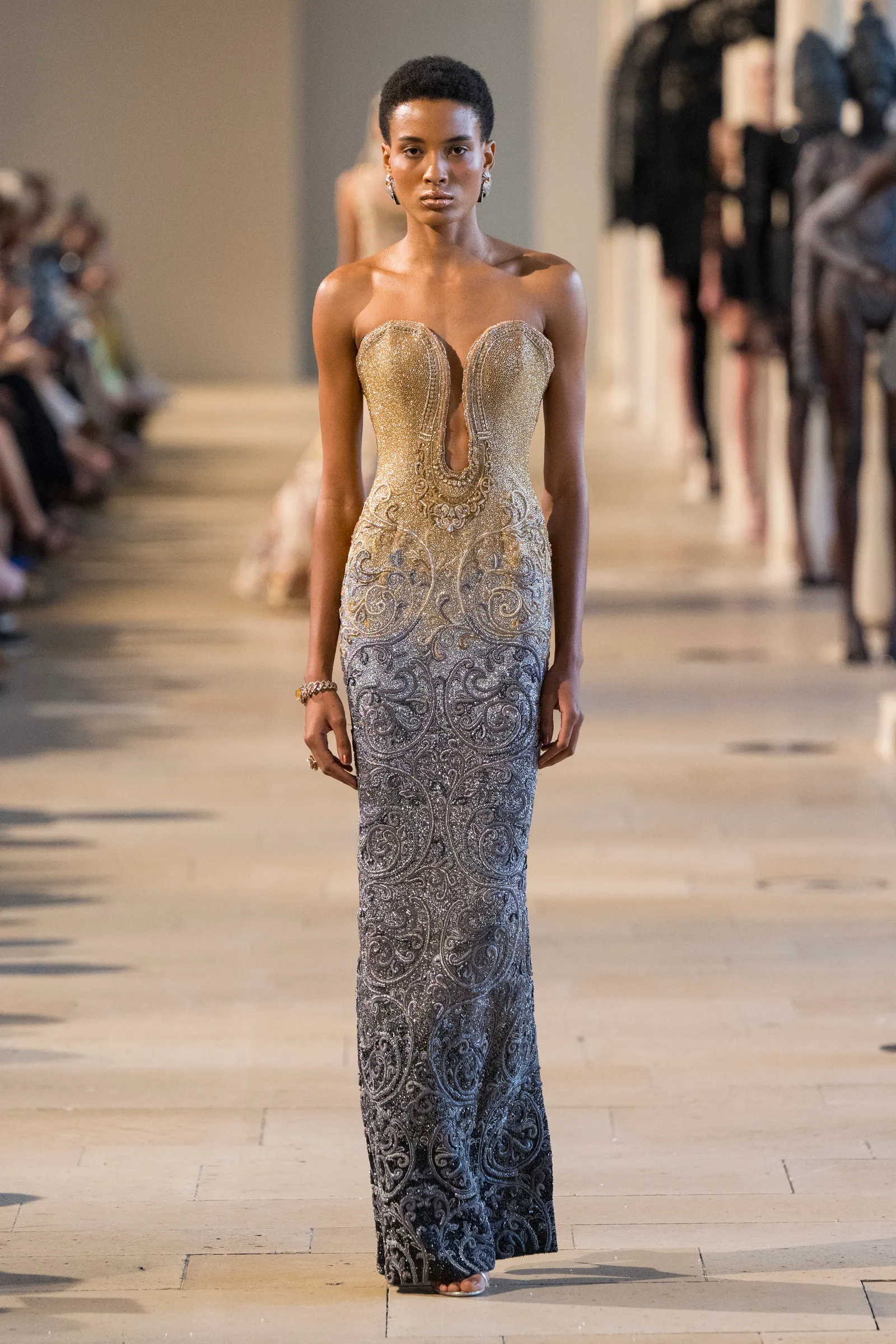
To pull that off, the atelier leaned on traditional embroidery techniques, zardozi and dabka, layered with crystals, stones and bugle beads until the surfaces convincingly stood in for sandstone, basalt, soapstone and bronze. Despite that density, the finished pieces stayed surprisingly light on the body. Cascading necklaces became structural parts of ivory draped gowns rather than separate accessories, gowns rendered in bronze tones fell around the body in heavy, sculpted drapery, and graphite embroidery built up contour lines so exact they could pass for tool marks left in stone. The embroidery wasn't decorating the silhouette, it was constructing it.
Collaborators Beyond the Atelier
Rahul Mishra Fall 2026 Couture · Courtesy of Rahul Mishra
Rahul Mishra Fall 2026 Couture · Courtesy of Rahul Mishra
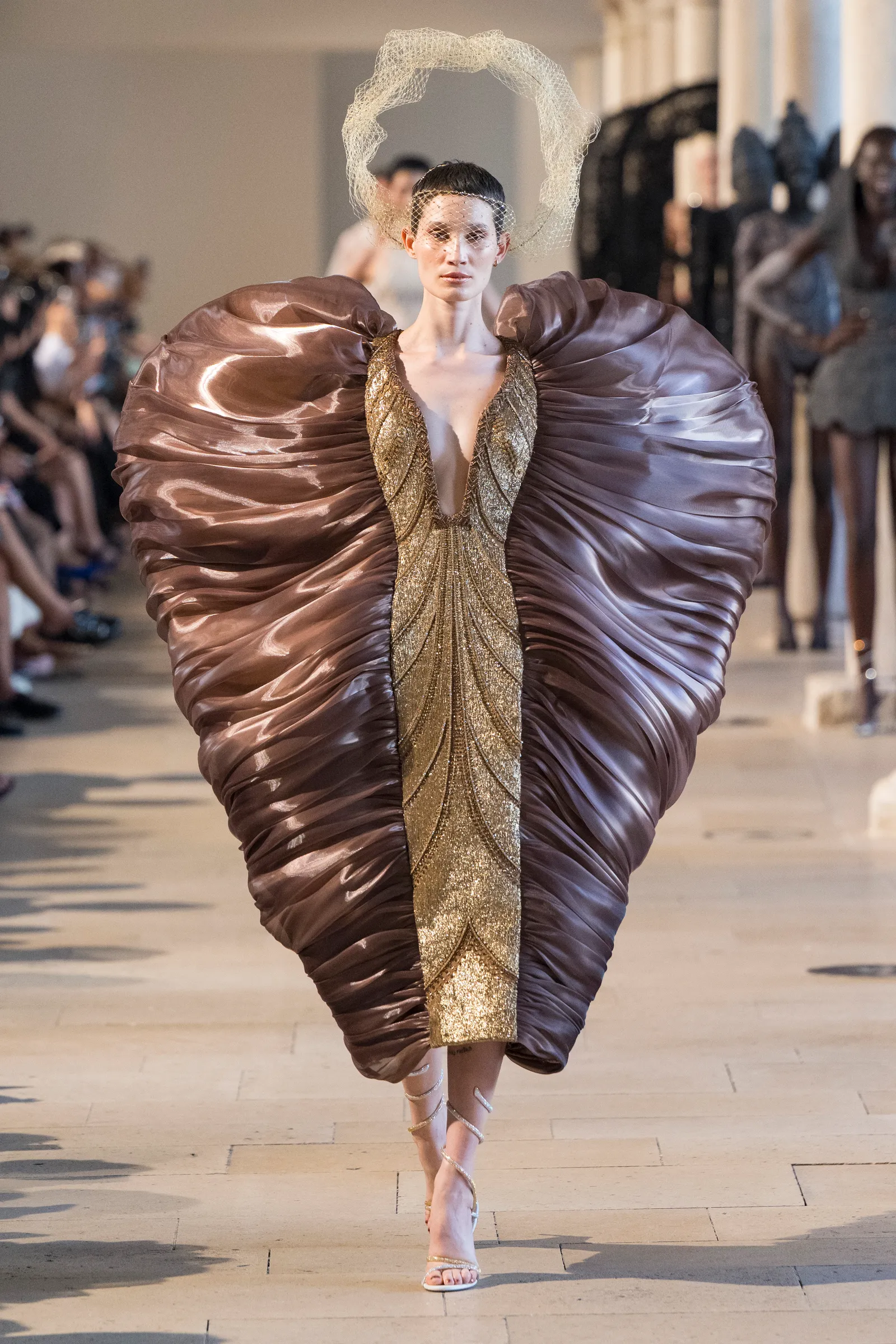
Mishra brought in outside specialists to push the concept past the garments themselves. Clay artisan Sumant Kumar built bespoke headpieces modeled on the ceremonial crowns seen in ancient sculpture, while veteran milliner Stephen Jones contributed veils and additional headwear, folding two very different craft traditions into a single show. High jewelry throughout was developed with Tanishq Natural Diamonds.
Sound carried just as much intention. Composer Jayant Luthra built the score from recordings made inside the Ajanta Caves, layering instruments including the mridangam, ghatam, temple drums, kanjeera, manjeera, thavil and singing bowls into compositions structured around Fibonacci sequences, a nod to the mathematical logic that shaped ancient ideas about music and architecture alike, and an attempt to recreate the acoustics of a cave complex dating back to the second century BCE.
When the Runway Became a Gallery
Rahul Mishra Fall 2026 Couture · Courtesy of Rahul Mishra
The show closed by dissolving the line between the models and the sculpture they referenced. Bodies were painted in shades of basalt and topped with towering ceremonial crowns and oversized masks, their embroidered surfaces echoing temple reliefs with unusual precision. One look placed a model inside an ornate architectural arch; another balanced multiple sculpted faces across the shoulders, turning the runway itself into something closer to a walking exhibition of temple carvings brought to life.
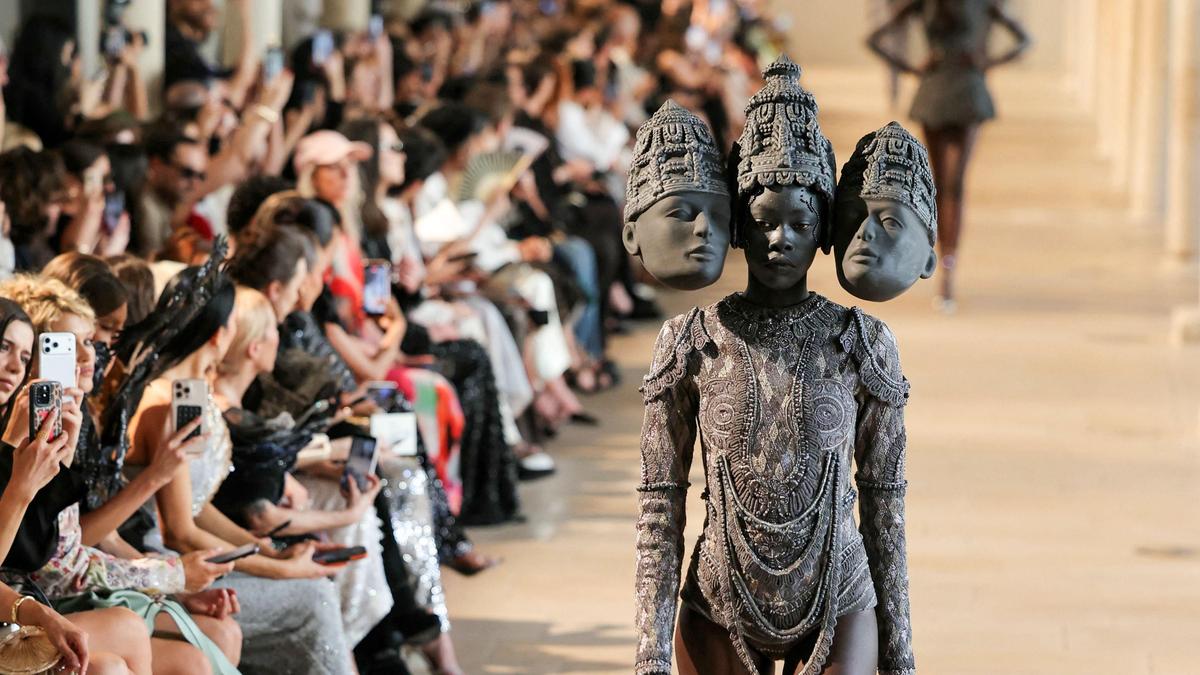
Rahul Mishra Fall 2026 Couture · Courtesy of Rahul Mishra
Mishra's interest here sits in process as much as imagery, swapping the chisel for an embroidery needle, stone for silk, and using that substitution to carry temple architecture's fixed monuments into motion. It's also not an isolated moment in Indian fashion: Tarun Tahiliani built his Spring/Summer 2001 collection around similar territory, drawing on Nataraj, apsaras and temple carving to create garments he described as sculptural forms in their own right, while Gaurav Gupta's Spring/Summer 2026 couture show reworked temple iconography through sculptural breastplates paired with his signature fluid draping. Devi joins that same lineage, shifting the emphasis away from the finished imagery and onto the patient, repetitive hand that made it possible in the first place.