Odysseus Ending Explained: Was Athena Real, and Why Did Odysseus Not Want to Go Home?
Nolan's Odyssey recasts Athena as a haunting memory and the gods as projections of guilt, revealing why Odysseus keeps fleeing the home he fought to reclaim.
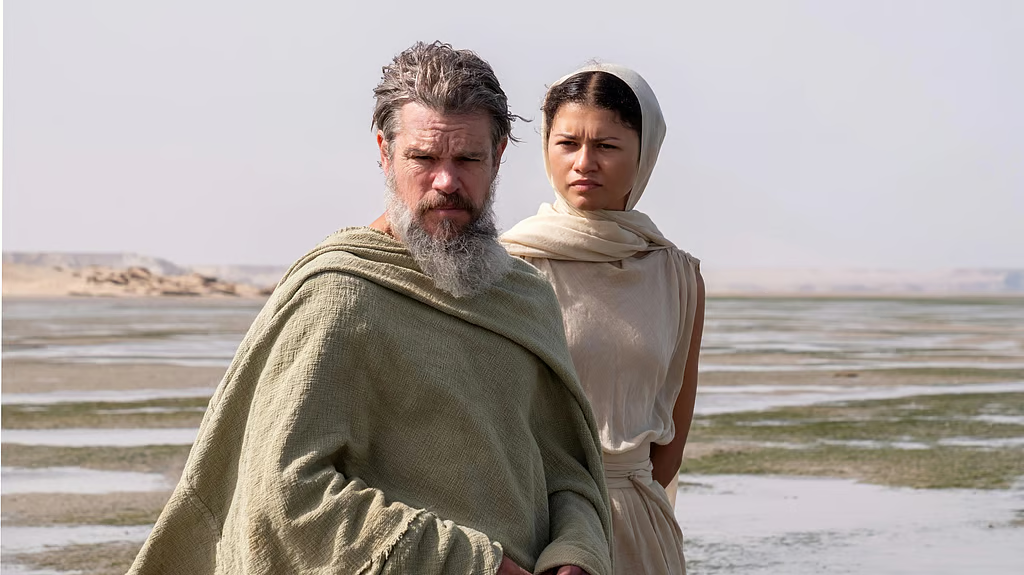
Credits - IMDB
Warning: heavy spoilers ahead.
Few would have imagined that a story like The Odyssey would ever need an ending explainer, but Christopher Nolan has a way of exceeding expectations. Homer's epic has been reimagined countless times, each version shaped to fit its era. What makes the Matt Damon-starrer so gripping is the heartbreaking twist in its final act, one that turns the king's journey on its head. Here is what happens.
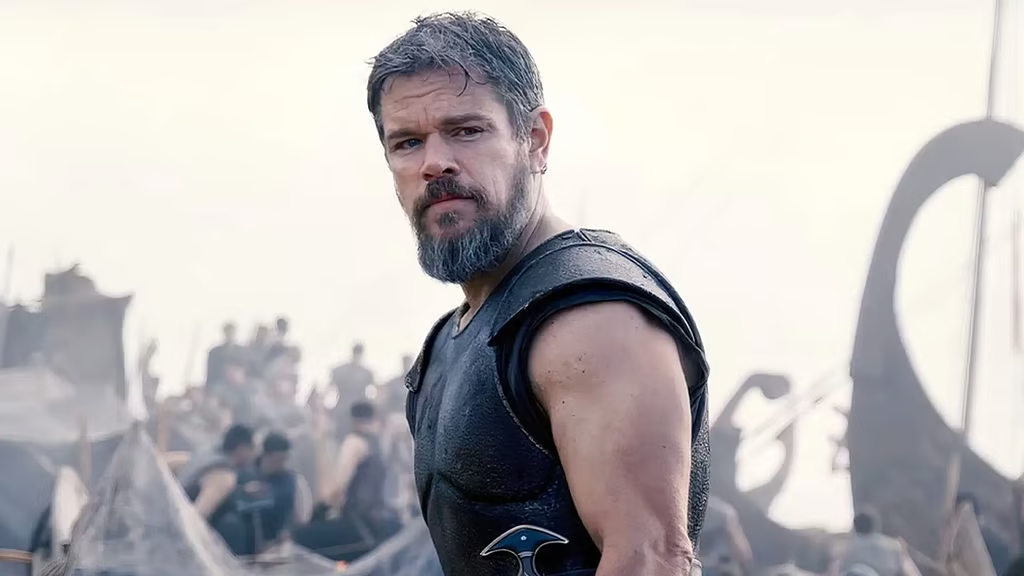
Credits - IMDB
How Christopher Nolan's The Odyssey Ends
After years at sea, Odysseus (Matt Damon) finally reaches Ithaca. In Hades, the shade of Agamemnon (Benny Safdie) had warned him not to walk into his own palace as a king, but to enter as nobody. Odysseus takes the advice, disguising himself as a beggar, and soon discovers why the warning mattered. His court is overrun by suitors led by Antinous (Robert Pattinson), who are already plotting to kill his son.
Still in disguise, Odysseus reconnects with his old and loyal swineherd Eumaeus (John Leguizamo), then quietly reveals himself to Telemachus (Tom Holland), the one person in the palace who treats a beggar with any decency. That single act of kindness is what convinces Odysseus his home is not entirely lost. Later, alone with Penelope (Anne Hathaway) and still unrecognised, he confesses what the Trojan Horse truly cost, not just a city, but the Law of Zeus itself, the sacred rule of hospitality that lets people trust one another and believe the person beside them will not turn on them without cause.
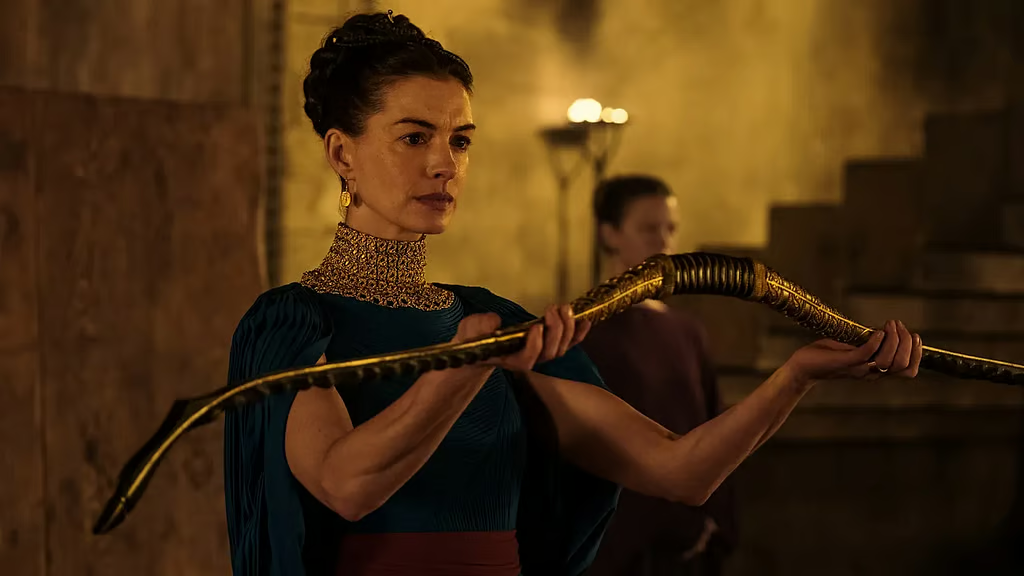
Image credit - IMDB
Penelope, testing the room, sets a challenge only her real husband could pass: string Odysseus's old bow and shoot an arrow clean through twelve axe heads. Every suitor fails. The beggar does not, and the disguise falls away.
As in Homer's version, Odysseus kills Antinous and Polybus (Corey Hawkins), while Telemachus cuts down the treacherous Melanthius (Logan Marshall-Green), and the disloyal servant Melantho (Mia Goth) is executed for siding with the suitors. But Odysseus is badly wounded in the fight, and the film never confirms whether those wounds are survivable.
With the journey complete, rather than take the throne he bled for, he hands the kingdom to Telemachus and sails off with Penelope toward open, unnamed water.
The Odyssey Ending Explained
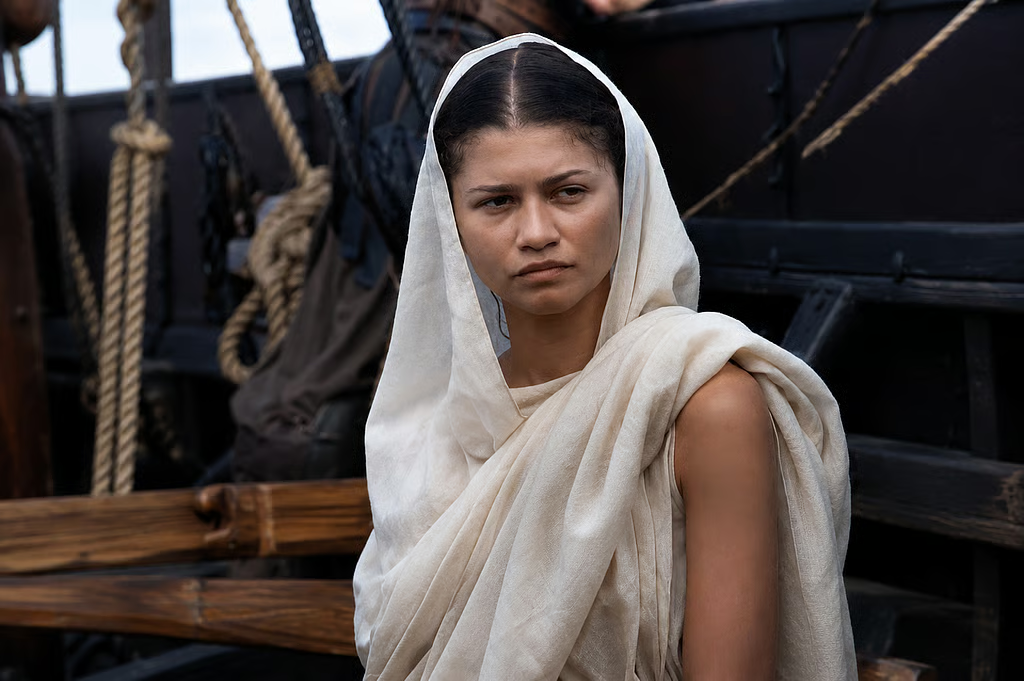
The film's biggest twist is a flashback buried inside Odysseus's own memory. Athena (Zendaya) has guided him through the entire journey, the cyclops, the sirens, the underworld, appearing in fleeting, almost visionary moments. But only when Nolan finally shows the fall of Troy in full does the truth surface. The woman guiding Odysseus is not Athena at all. She was a priestess he watched beheaded when Troy was ransacked, her death folded so deeply into his memory that he spent decades dressing his guilt up as divine company.
Credit - IMDB
Every time "Athena" appeared to steady him through a crisis, it was not wisdom arriving from Olympus. It was a dead woman's face standing in for a war crime he cannot put down.
In doing this, Nolan rejects the central premise of Homer's Odyssey, that the gods shaped the fate of men, and reframes it as a product of the human subconscious. The poem holds that the voyage happened because of Poseidon's wrath over the king's treatment of his son, the cyclops Polyphemus. Here, the sea god's wrath is only superstition, a story spread among terrified sailors. In Nolan's world, the gods are simply what guilt, fear and violence look like when a person needs them to have a face.
Why Did Odysseus Not Want to Go Back Home?
Homer's Odysseus wants nothing more than Ithaca. Nolan's is harder to read. Menelaus (Jon Bernthal) made it back to Sparta in a fraction of the time, and Odysseus is asked, more than once, why his own journey took so long. He has no answer ready until he is finally home, facing the consequences of the Trojan Horse.
The truth he arrives at has nothing to do with Poseidon or bad winds. He saw what the Trojan Horse actually unleashed once the gates opened, and some part of him has been circling the coast ever since. What waited for him at home, a wife, a son and a kingdom, was waiting for a version of himself that had not yet broken the one rule holding people together.
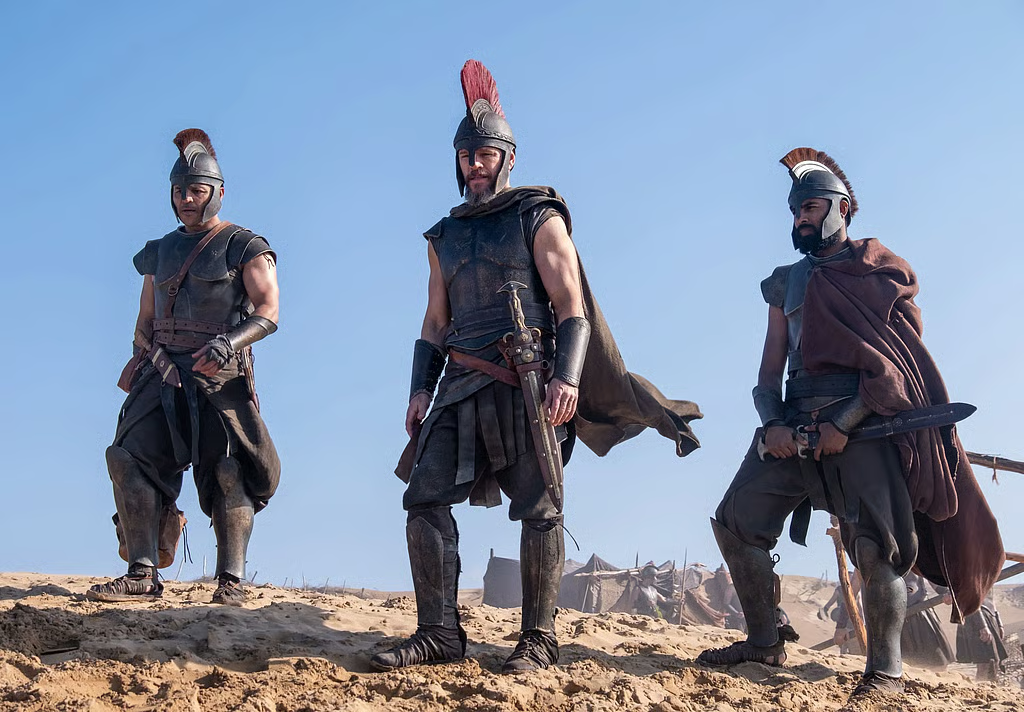
Image credit - IMDB
This Odysseus saw the end of the world in the sight of his own men pillaging a city at night for the sake of victory alone. Circe (Samantha Morton) was not wrong to turn his men into pigs, they were, after all, little different from swine that had developed a taste for human blood, as were the others who returned to their kingdoms after the war. Zeus's Law of Hospitality had been broken, and his side's victory rested on celebrating that blasphemy. The blame for all of it settled on his shoulders.
It is what haunts him. More than that, he is terrified of returning to a world forever changed by his own actions. And so, through one misfortune after another, he keeps wandering, so he never has to face the world his cunning brought into being.